Kategori: internasional

  • 40 Nations Meet to Reopen Strait of Hormuz Amid Rising Tensions, U.S. Left Out

    40 Nations Meet to Reopen Strait of Hormuz Amid Rising Tensions, U.S. Left Out

    JAKARTA, KONTAK BANTEN – Around 40 countries convened a high-level virtual meeting on Thursday, April 2, 2026, to discuss coordinated efforts to reopen the strategic Strait of Hormuz, which has been partially blocked by Iran amid escalating regional conflict.

    The meeting, led by the United Kingdom, notably excluded the United States, signaling a shift in alignment as some traditional allies appear to distance themselves from Washington’s stance under President Donald Trump.

    Participants included major global players such as France, Germany, Canada, the United Arab Emirates, and India. Discussions focused on ensuring the uninterrupted flow of global energy supplies through the vital maritime route.

    UK Foreign Secretary Yvette Cooper criticized Tehran’s actions, stating that Iran had crossed a line by disrupting international shipping lanes.

    “Iran has effectively hijacked a key global shipping route and is holding the world economy hostage,” Cooper said, as quoted by Reuters.

    Although no concrete decision was reached, participating nations agreed that the Strait of Hormuz must remain open to international navigation and should not be subject to transit fees imposed by Iran.

    Further discussions are scheduled for next week, involving military planners who will assess potential measures such as mine-clearing operations and securing safe passage for commercial vessels.

    Rising Tensions and Global Impact

    Iran’s move to restrict access to the strait follows joint military strikes by the United States and Israel beginning on February 28, 2026. The disruption has affected nearly 20 percent of global oil supply, triggering volatility in energy markets.

    French President Emmanuel Macron warned against military escalation, emphasizing the high risks involved, including potential missile attacks from coastal areas.

    Meanwhile, several European nations have begun scaling back military cooperation with Washington. Italy reportedly denied landing access to U.S. bombers, while Spain restricted its airspace for operations linked to the Iran conflict.

    In response, Trump lashed out at allies, urging them to secure their own energy access.

    “If France or other countries want oil or gas, they can go to the Strait of Hormuz themselves. We will not be involved,” Trump wrote on his Truth Social account.

    He further stated that the U.S. would no longer assist countries that, in his view, failed to support Washington during the conflict.

    Diplomatic and Security Developments

    U.S. Secretary of State Marco Rubio indicated that the Trump administration may reassess its relationship with NATO after the conflict.

    At the global level, the United Nations Security Council is scheduled to vote on a resolution concerning maritime protection in the Strait of Hormuz on Saturday, April 4, 2026. The proposal, initiated by Bahrain, could allow nations to take defensive measures to safeguard shipping routes.

    Despite the restrictions, Iran continues to grant selective access to allied nations, including Pakistan, Malaysia, China, and Turkey. Recently, Tehran also assured safe passage for vessels flying the Philippine flag.

    Iran is also working with Oman to develop a maritime traffic monitoring protocol for the strait.

    Iran’s Deputy Foreign Minister for Legal and International Affairs, Kazem Gharibabadi, emphasized that wartime conditions make normal maritime operations difficult.

    “We are in a state of war, and wartime conditions cannot be managed under peacetime rules,” he said, according to IRNA.

    Russia Offers Mediation

    Vladimir Putin expressed concern over the escalating situation in the Middle East and offered Russia’s assistance in stabilizing the region.

    “We are ready to make every effort to help stabilize the situation and return it to normal,” Putin said during a meeting with Egypt’s Foreign Minister Badr Abdelatty.

    Oil Prices Surge

    Global oil markets have reacted sharply to the crisis. According to Refinitiv data, Brent crude prices closed at $109.28 per barrel on Thursday, April 2, up 8.03 percent. During intraday trading, prices briefly reached $109.74 per barrel.

    In the spot market, S&P Global reported that Brent prices surged as high as $141.36 per barrel, reflecting strong demand for shipments over the next 10 to 30 days.

    Meanwhile, West Texas Intermediate (WTI) crude also recorded significant gains, closing at $111.54 per barrel, up 11.41 percent.

    The ongoing crisis underscores the fragility of global energy supply chains and raises concerns over prolonged economic disruption if tensions in the region continue to escalate.

  • Philippines Imports 700,000 Barrels of Russian Oil Amid Worsening Global Energy Crisis

    Philippines Imports 700,000 Barrels of Russian Oil Amid Worsening Global Energy Crisis


    JAKARTA, KONTAK BANTEN – The global energy crisis, fueled by escalating tensions in the Middle East, is beginning to take a significant toll on countries across Asia. The Philippines has emerged as one of the nations taking swift action, seeking alternative energy sources to secure its fuel supply.

    In a notable development, a tanker carrying more than 700,000 barrels of Russian crude oil has arrived in the Philippines earlier this week. The shipment comes just days after the government officially declared a national energy emergency, highlighting the urgency of the situation.

    The vessel, identified as Sara Sky and flying the Sierra Leone flag, reportedly docked at Limay Port, home to the country’s primary oil refinery operated by Petron Corp. According to shipping documents and industry sources, the cargo consists of high-quality crude oil sourced from Russia’s ESPO pipeline.

    This delivery marks a significant shift in the Philippines’ energy sourcing strategy, as the country moves to diversify its fuel imports amid rising global prices and supply chain disruptions. It is also believed to be the first shipment of Russian crude to the Philippines in several years.

    The Philippines remains heavily dependent on imported fuel, making it particularly vulnerable to fluctuations in global oil markets. The ongoing geopolitical tensions, especially those affecting key transit routes such as the Strait of Hormuz, have further intensified concerns over supply stability.

    President Ferdinand Marcos Jr. emphasized that the government is actively exploring all possible options to secure energy resources.

    “We are not limiting ourselves to traditional suppliers. We are exploring alternative sources that are less affected by the ongoing conflict,” he said during a recent press briefing.

    To mitigate the impact of the crisis, the Philippine government has activated an emergency energy fund worth 20 billion pesos (approximately US$332 million). The fund is intended to stabilize supply and cushion the economy against further price shocks.

    Meanwhile, authorities are also considering increasing reliance on coal-fired power generation as a short-term solution to maintain electricity supply, especially as liquefied natural gas (LNG) prices continue to surge. However, this approach has raised concerns over environmental impacts, given coal’s significant contribution to carbon emissions.

    Energy analysts view the Philippines’ move as a reflection of a broader global trend, where countries are forced to adopt flexible and sometimes unconventional strategies to secure energy amid uncertainty.

    (lebih…)

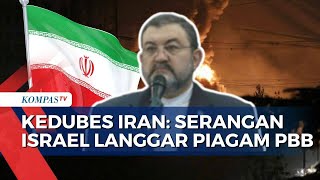
  • Serangan Israel, Kedubes Iran: Ini Ancaman Serius, Dewan Keamanan PBB Wajib Turun Tangan

    Serangan Israel, Kedubes Iran: Ini Ancaman Serius, Dewan Keamanan PBB Wajib Turun Tangan


    JAKARTA KONTAK BANTEN  – Kedutaan Besar (Kedubes) Iran di Jakarta
    menyampaikan sikap terkait serangan Amerika Serikat (AS) dan Israel,
    terhadap lokasi-lokasi sipil dan infrastruktur vital di Teheran serta
    beberapa kota lainnya di Iran, Sabtu (28/2/2026) waktu setempat.
    Serangan itu dinilai melanggar integritas teritorial dan kedaulatan
    nasional Iran.

    “Serangan Amerika Serikat dan rezim Zionis Israel terhadap Republik
    Islam Iran merupakan pelanggaran terhadap Pasal 2 ayat (4) Piagam
    Perserikatan Bangsa-Bangsa, dan merupakan tindakan agresi yang nyata
    terhadap Republik Islam Iran,” demikian pernyataan Kedubes Iran di
    Jakarta yang diterima redaksi, Sabtu (28/2/2026).

     “Menanggapi agresi merupakan hak yang sah dan
    legitimasi Republik Islam Iran berdasarkan Pasal 51 Piagam Perserikatan
    Bangsa-Bangsa,” imbuh keterangan tersebut. 

     Angkatan Bersenjata Iran akan menggunakan hak
    tersebut sepenuhnya dalam rangka mempertahankan integritas teritorial
    dan kedaulatan nasional Iran, dengan memberikan respons yang tegas dan
    kuat terhadap agresi Israel dan AS.

     Sebagai negara pendiri Perserikatan Bangsa-Bangsa
    (PBB) yang tujuan utamanya mencegah agresi, pelanggaran perdamaian, dan
    ancaman terhadap perdamaian, Iran mengingatkan tanggung jawab Dewan
    Keamanan PBB untuk segera mengambil tindakan dalam menghadapi
    pelanggaran perdamaian dan keamanan internasional, akibat agresi
    terang-terangan Israel terhadap Iran.

     Terkait hal tersebut, Iran meminta Ketua dan para Anggota Dewan Keamanan untuk segera mengambil langkah.

     Dengan merujuk pada berbagai pelanggaran berat
    terhadap Piagam PBB, hukum internasional, hak asasi manusia, dan hukum
    humaniter internasional yang dilakukan oleh Amerika Serikat dan rezim
    Zionis selama beberapa dekade terakhir – khususnya dalam beberapa tahun
    terakhir -, Kedubes Iran di Indonesia tegas mengecam tindakan agresif
    dan kriminal tersebut terhadap integritas teritorial Iran.

     Tindakan Washington dan Tel Aviv dicap sebagai ancaman serius terhadap perdamaian dan keamanan regional maupun internasional.

     “Kedubes Iran di Indonesia berharap agar Pemerintah
    dan rakyat Indonesia, para tokoh politik, organisasi keagamaan dan
    Islam, kalangan akademisi, serta insan media untuk secara tegas dan
    terbuka mengecam dimulainya perang dan agresi terhadap wilayah Republik
    Islam Iran,” pungkas keterangan tersebut.